
ENGLISH TESTLAB / THE LEARNING JOURNAL
คำศัพท์ TOEIC ที่สับสนบ่อย: affect/effect, ensure/insure และคู่หลอก
คำศัพท์ที่หน้าตาคล้ายหรือแปลไทยใกล้กันเป็น trap สำคัญของ TOEIC หน้านี้รวมกลุ่มคำสับสน พร้อมตัวอย่างและ mini quiz ที่ช่วยตัดตัวเลือกเร็วขึ้น
สรุปหน้านี้
ในหน้านี้
จำศัพท์หมวด confusing words เป็นชุดคำ ไม่ใช่คำเดี่ยว
TOEIC มักวัดคำในอีเมล ประกาศ และเอกสารธุรกิจ ให้จำคำพร้อม word family, collocation และตัวอย่างประโยค จะเอาไปใช้ตัดตัวเลือกได้เร็วกว่าอ่านเป็น list ยาว
- ดู word family
- จำ collocation
- ลอง mini quiz
ใช้ศัพท์หมวด confusing words ตรงไหนใน TOEIC
มักเจอในอีเมล memo notice และบทอ่านธุรกิจที่พูดถึง confusing words
Part 5 มักถาม word form หรือ collocation ส่วน Part 7 มักถามความหมายจากบริบท
อย่าจำแค่คำแปลไทยคำเดียว ให้ดูว่าคำนี้มักอยู่กับคำไหนและทำหน้าที่อะไรในประโยค
วิธีอ่านหน้านี้ให้ไม่หนัก
ตัวอย่างใน word family เป็นประโยคที่ English TestLab สร้างขึ้นใหม่เพื่อฝึกบริบท TOEIC ไม่ใช่ข้อสอบจริง
เริ่มจากหัวคำและความหมายสั้น ๆ ก่อน แล้วค่อยดู collocation ที่ใช้บ่อย
อ่านตัวอย่างประโยคเพื่อเห็นบริบทธุรกิจ ไม่ต้องท่องทุกประโยคในรอบแรก
ปิดท้ายด้วย mini quiz เพื่อเช็กว่าจำ word family และ collocation ได้จริงหรือยัง
Vocabulary workbench
คำศัพท์เป็นชุด อ่านแล้วใช้ทำโจทย์ได้ทันที
สแกนหัวคำก่อน แล้วดู collocation กับประโยคตัวอย่างเฉพาะชุดที่ยังไม่แม่น
affect/effectกระทบ ผลกระทบ และมีประสิทธิภาพ
คำที่มักใช้ร่วมกัน (Collocations):
- affect sales
- positive effect
- effective strategy
ดูตัวอย่างประโยคในข้อสอบ
- The delay may affect the delivery schedule.
- The new policy had a positive effect on productivity.
economic/economicalเศรษฐกิจและประหยัด
คำที่มักใช้ร่วมกัน (Collocations):
- economic growth
- economical option
- local economy
ดูตัวอย่างประโยคในข้อสอบ
- The report discusses economic growth in the region.
- Taking the train is the most economical option.
considerable/considerateมากพอสมควรและมีน้ำใจ
คำที่มักใช้ร่วมกัน (Collocations):
- considerable experience
- considerate manager
- under consideration
ดูตัวอย่างประโยคในข้อสอบ
- The applicant has considerable experience in logistics.
- It was considerate of the team to adjust the schedule.
principal/principleหลักใหญ่/หัวหน้า และหลักการ
คำที่มักใช้ร่วมกัน (Collocations):
- principal reason
- basic principle
- school principal
ดูตัวอย่างประโยคในข้อสอบ
- The principal reason for the change is lower demand.
- The company follows the principle of transparent pricing.
ensure/insure/assureทำให้แน่ใจ ทำประกัน และรับรองกับคน
คำที่มักใช้ร่วมกัน (Collocations):
- ensure quality
- insure a vehicle
- assure customers
ดูตัวอย่างประโยคในข้อสอบ
- The checklist helps ensure product quality.
- The agent assured customers that the issue was resolved.
personal/personnelส่วนตัวและพนักงาน
คำที่มักใช้ร่วมกัน (Collocations):
- personal information
- personnel department
- personnel file
ดูตัวอย่างประโยคในข้อสอบ
- Do not share personal information by email.
- The personnel department updated the policy.
stationery/stationaryเครื่องเขียนและอยู่นิ่ง
คำที่มักใช้ร่วมกัน (Collocations):
- office stationery
- remain stationary
- stationery order
ดูตัวอย่างประโยคในข้อสอบ
- The office ordered stationery for the training room.
- The vehicle remained stationary during the inspection.
prospective/perspectiveที่คาดว่าจะเป็น และมุมมอง
คำที่มักใช้ร่วมกัน (Collocations):
- prospective client
- new perspective
- prospective employee
ดูตัวอย่างประโยคในข้อสอบ
- The sales team contacted prospective clients.
- The consultant offered a different perspective on the problem.
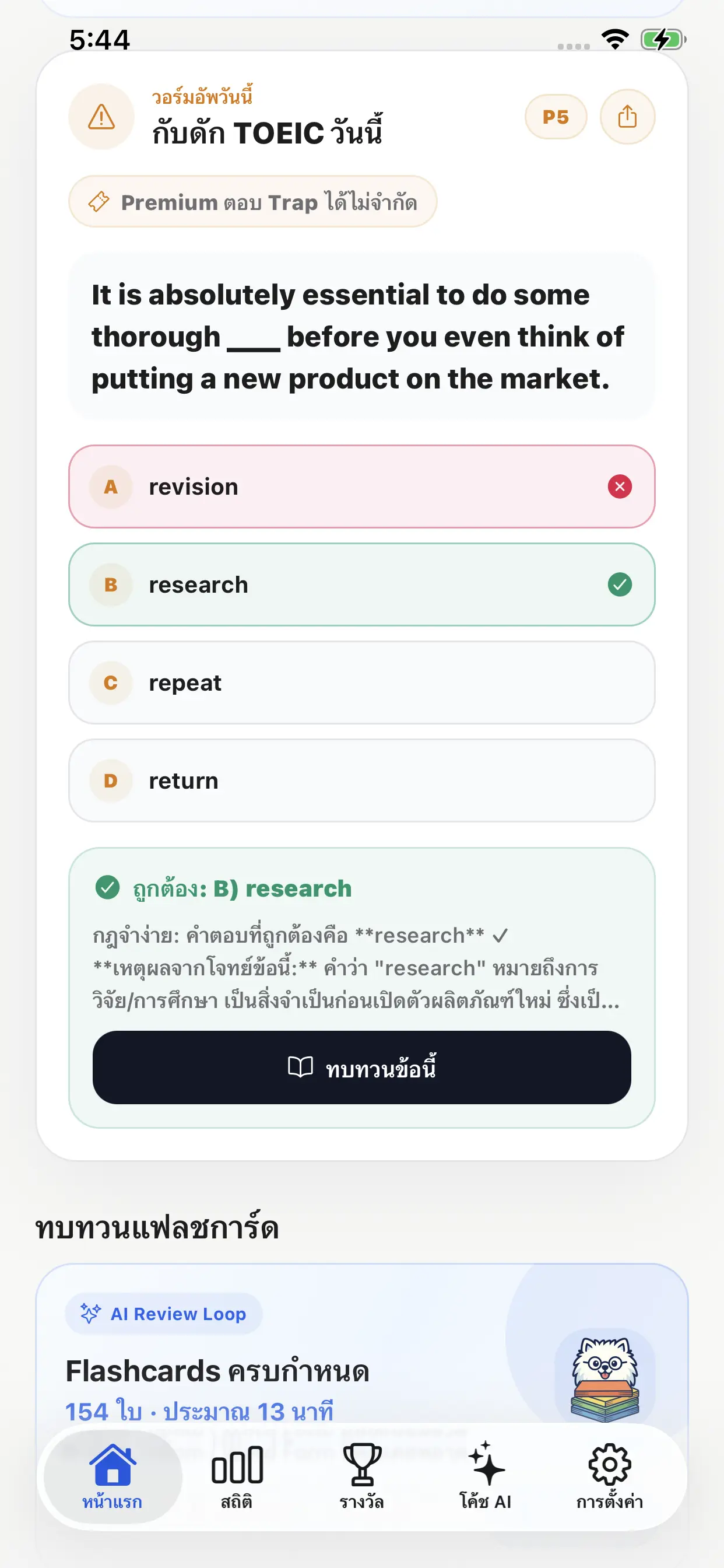
Mini quiz
ลองทำโจทย์สั้นพร้อมเฉลย
ไปต่อจากหน้านี้
ลิงก์ที่เกี่ยวข้อง
คำถามที่พบบ่อย
FAQ
ควรท่องศัพท์ TOEIC เป็นคำเดี่ยวไหม?
คำเดี่ยวช่วยเริ่มต้นได้ แต่ควรจำเป็น word family และ collocation เพราะข้อสอบมักวัดคำในประโยค
ศัพท์หมวดนี้ใช้กับ Part ไหนมากที่สุด?
ใช้ได้ทั้ง Part 5, 6 และ 7 โดย Part 5 มักถามรูปคำ ส่วน Part 7 ถามความเข้าใจในบริบท
ควรฝึกศัพท์อย่างไรให้จำได้นาน?
อ่านตัวอย่างประโยค ทำ mini quiz แล้วกลับมาทบทวนคำที่พลาดในวันถัดไป จะจำได้ดีกว่าการอ่าน list รอบเดียว
FROM KNOWING TO DOING
อยากจำศัพท์ TOEIC ในบริบทจริง?
ใช้ English TestLab ฝึกโจทย์สั้นพร้อม AI อธิบายว่าคำนี้หลอกด้วย word form, collocation หรือ context อย่างไร
YOUR PRACTICE. YOUR PACE.
ดาวน์โหลด แล้วลองฝึกฟรี
iPhone · iPad · Androidปลดล็อก Premium เพิ่มได้ภายในแอป